

Token Functions
The WCT token has three primary functions within the WalletConnect Network:- Rewards: WCT tokens are distributed as cashback, staking rewards, and node operator rewards.
- Staking: Participants can stake WCT tokens to earn rewards and participate in governance.
- Governance: WCT holders can vote on proposals and changes, giving the community control over the Network’s development through decentralized governance.
WCT Allocation
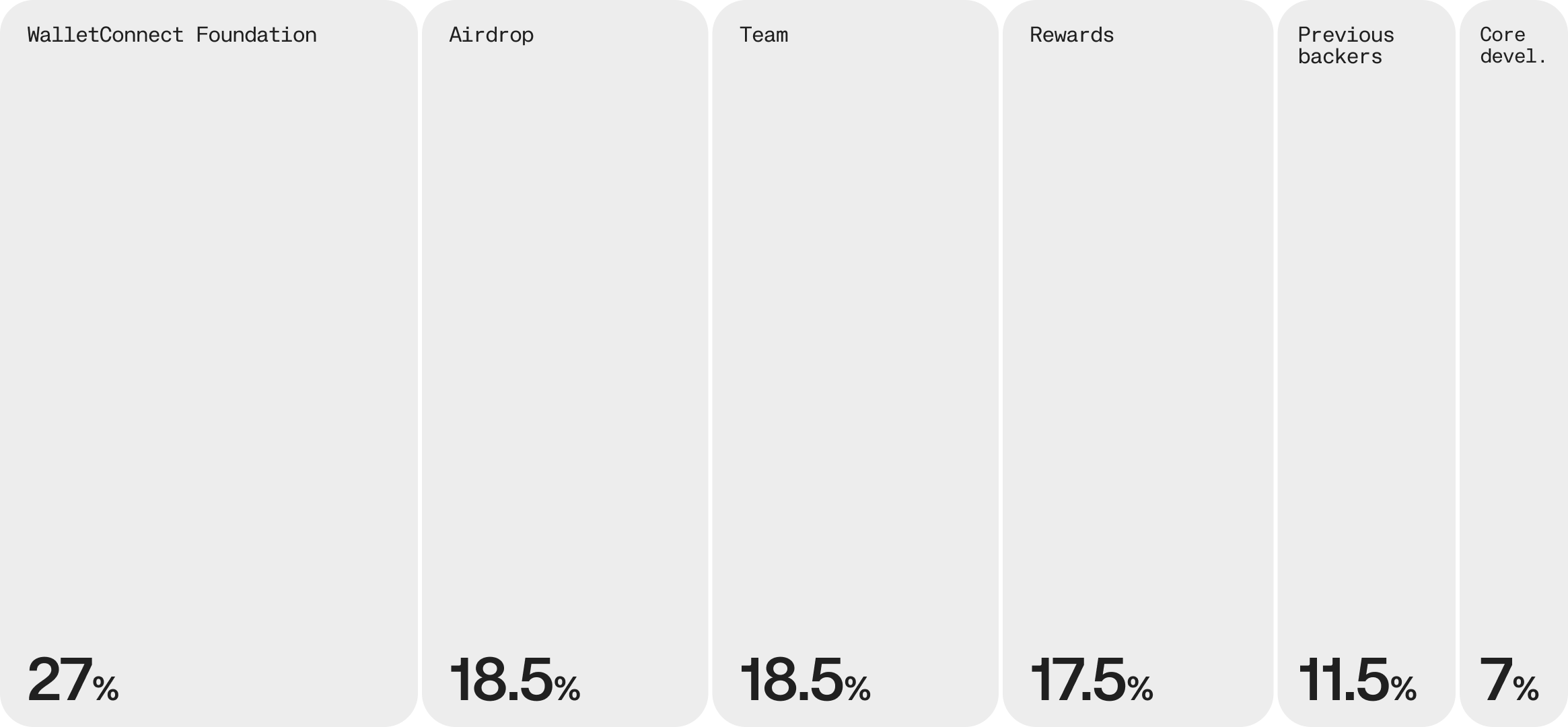
- WalletConnect Foundation: 27%
- Airdrops: 18.5%
- Team: 18.5%
- Rewards: 17.5%
- Previous Backers: 11.5%
- Core Development: 7%
Fixed Supply
The initial design of the WalletConnect Network’s tokenomics does not include token inflation. The current model focuses on utilizing existing token allocations such that inflation is not envisioned within the first 3-4 years. Introduction of an inflationary design would follow only after the token holders’ vote to approval following careful consideration of Network metrics, participant feedback, and overall ecosystem health, with specific parameters to be determined through Network governance processes.Token Flow
Payments represent one of the largest economic opportunities in crypto. Global card networks generate hundreds of billions in fee revenue annually — funding rewards programs, interchange, and network operations for every participant. WalletConnect Pay is designed to bring that same model onchain: generate real transaction revenue from real commerce, powered by the WalletConnect Network. The Network is the primary engine of WalletConnect Pay. The WCT token sits at the centre, connecting payment activity to staking rewards, governance weight, and long-term token value.How the Network Powers Value Flows
Every payment powered by WalletConnect Pay generates transaction fees. Those fees flow back into the Network through multiple mechanisms. Additional mechanisms are expected to be implemented. Rewards Distribution — Fee revenue funds rewards across all four stakeholder groups in the payment flow:Why This Model Works
Most alternative payment methods have failed not for technical reasons, but because they gave users no reason to switch. UK Open Banking was technically superior to cards but offered consumers zero upside. CurrentC was backed by the largest US retailers but built solely to save merchants on fees — and died before launch because users had nothing to gain. WalletConnect Pay is designed around the opposite principle: lead with incentives on every side. The result is a self-reinforcing flywheel — more payments generate more fees, more fees fund better rewards, better rewards drive more payments. WCT is what holds this flywheel together. Stakers benefit as volume grows. Governance shapes how rewards and buybacks are calibrated over time. The token is not waiting for utility — it is the connective tissue between a payments network and its community of participants.Merchants pay transaction fees — not users. The end-user experience remains frictionless by design.